Intelligence. Accountability. Analysis.
Est. 2022 · Washington, D.C.
The Congressional Times
We follow the data, not the narrative
◆ Live Intelligence
Loading...
Analysis Loading today's analysis...
Federal Reserve and U.S. Economic Policy

Fed Rate Path Uncertainty Persists as Bond Market Signals Caution
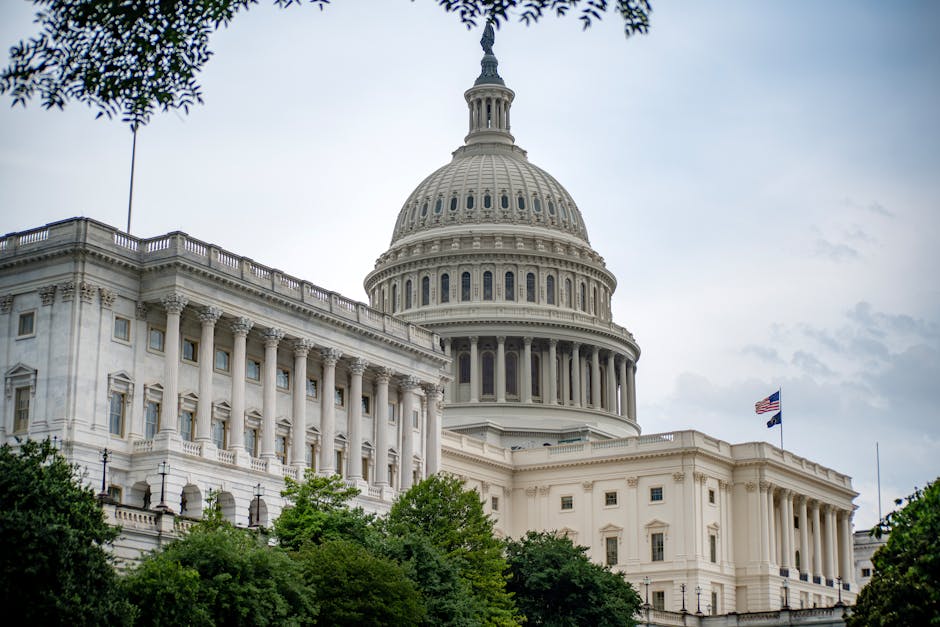
Fed Rate Path Uncertainty Persists as Bond Market Signals Caution

TD Securities' rate strategy outlook reflects a broader institutional consensus that the Federal Reserve faces limited room to move rates in either direction without disrupting yield curve dynamics.

Gab-E Intelligence Platform · August 19, 2026

The Federal Reserve is expected to hold interest rates steady in the near term, according to Gennadiy Goldberg, head of U.S. rates strategy at TD Securities, who made the comments during an appearance on Bloomberg Surveillance on August 19, 2026. Goldberg stated that while rate hikes could flatten the yield curve, the Fed is likely to avoid that path for now. The yield curve, which plots the difference between short-term and long-term Treasury bond yields, is a closely watched indicator of economic expectations tracked in daily U.S. Treasury market data published by the U.S. Department of the Treasury.

The Federal Reserve's current benchmark federal funds rate target range is set by the Federal Open Market Committee, whose meeting minutes and policy statements are published publicly at federalreserve.gov. The most recent FOMC statement, as of this reporting date, reflects the committee's stated data-dependent approach to future rate decisions. No FOMC meeting vote on a rate change has been recorded in publicly available Federal Reserve records for the August 2026 cycle.

Bond market movements carry direct implications for U.S. economic policy because Treasury yields influence borrowing costs across mortgages, corporate debt, and federal deficit financing. The Congressional Budget Office has noted in prior budget outlooks that a one-percentage-point increase in interest rates raises projected federal net interest costs by hundreds of billions of dollars over a ten-year window, based on CBO's standard debt-service modeling disclosed in its annual Budget and Economic Outlook reports.

Goldberg did not specify a timeline for a potential policy shift, and TD Securities has not filed any public lobbying disclosures with the Senate Office of Public Records indicating direct advocacy on Federal Reserve policy. The firm operates as a registered broker-dealer under Securities and Exchange Commission oversight, with filings accessible through the SEC's EDGAR system.

What remains unknown is whether the Fed will adjust its rate guidance at the September 2026 FOMC meeting. The public record that would answer this question is the FOMC policy statement and accompanying Summary of Economic Projections, both scheduled for release by the Federal Reserve on the date of that meeting.

Today's Analysis
Loading...
Latest Intelligence
Congressional Intelligence
Loading...
Financial Intelligence
Loading...
Geopolitical Intelligence
Loading...
Follow the MoneyGab-E Political Intelligence Investigation
Loading...
Opinion & Analysis
Loading...
Archive
Loading...
About
Our Mission

We Follow the Data, Not the Narrative

The Congressional Times exists because public records are public — and the analysis built from them should not be exclusive to those who can afford $60,000-a-year intelligence subscriptions.

Every story published in The Congressional Times is sourced to a verifiable public record: a court filing, a Senate lobbying disclosure, an FEC contribution record, a USASpending contract, or a verified news report. We state our sources inline. We show our math. When we are wrong, we say so publicly.

We do not editorialize in news coverage. We do not use loaded language. Both political parties are held to identical standards.

The Follow the Money investigations are the heart of this publication. Each begins with Gab-E Political Intelligence running against 10+ million government records before a single word of editorial is written.

Powered by Gab-E, an elite global intelligence platform built to democratize political and financial intelligence.

Editorial Policy
Editorial Standards & Corrections Policy

How We Source, Verify, and Correct Our Work

Every factual claim in a Congressional Times story is checked against a primary source: a government filing, a court record, a direct quote, before publication. When a claim can't be verified or doesn't hold up as originally reported, we drop it or reframe it. We do not publish disputed claims as settled fact.

When we get it wrong: we correct the story directly, note the correction and date at the bottom of the piece, and update the record. We do not quietly edit and move on.

Bylines: stories with a named byline are written and fact-checked by that person. Stories without a byline are sourced from Gab-E Political Intelligence, our automated research platform, and are labeled as such.

Ownership: The Congressional Times is published by Gab-E Holdings LLC. Gab-E, our intelligence platform, powers our sourcing and research pipeline.

Corrections or concerns: support@gab-e.com