Intelligence. Accountability. Analysis.
Est. 2022 · Washington, D.C.
The Congressional Times
We follow the data, not the narrative
◆ Live Intelligence
Loading...
Analysis Loading today's analysis...
Congressional Vacancy

Graham Senate Vacancy Threatens GOP House Majority, Lawyers Warn
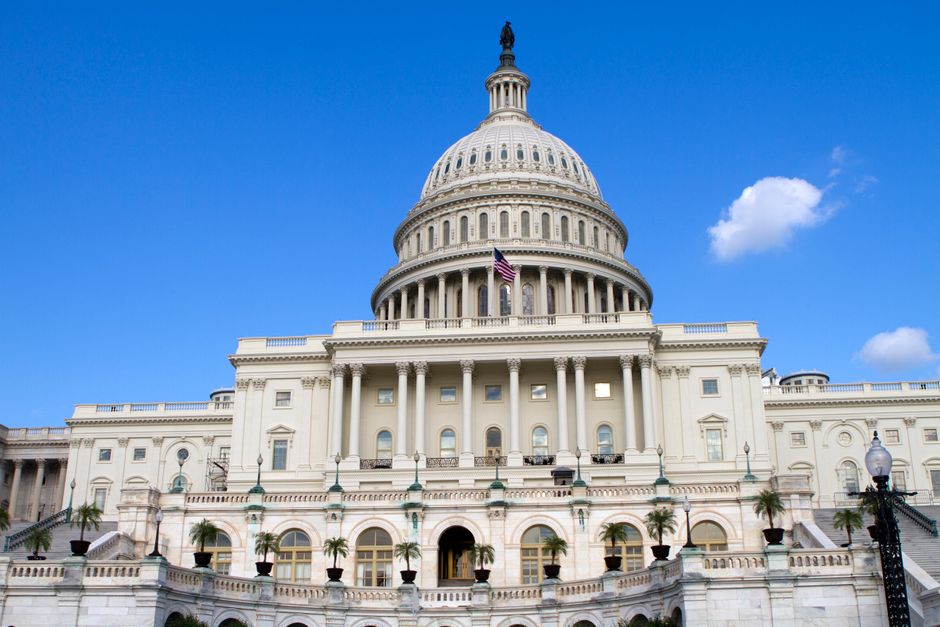
Graham Senate Vacancy Threatens GOP House Majority, Lawyers Warn

The mechanics of filling a Senate seat from South Carolina have created a structural dilemma for Republicans: any House member who wins the seat would vacate a House district, triggering a second...

Gab-E Intelligence Platform · August 1, 2026

Republicans face a compounding political problem in filling the Senate seat left vacant by the death of Sen. Lindsey Graham (R-S.C.), who died July 11, 2026, at age 71, according to reporting by the New York Post published August 1, 2026. Legal advisers and prospective candidates have warned that if a sitting Republican House member is appointed or elected to the Senate seat, the resulting House vacancy would require a separate special election, temporarily reducing the GOP's already narrow House majority.

The Republican House majority currently stands in the single digits, meaning even a temporary vacancy caused by a member departing for the Senate could affect the party's ability to pass legislation during the intervening period. The precise current House seat count is a matter of public congressional record maintained by the Office of the Clerk of the U.S. House of Representatives.

Facing that prospect, President Trump publicly endorsed Darline Graham, the late senator's sister, as his preferred replacement, according to the same New York Post report dated August 1, 2026. A non-House candidate such as Darline Graham would avoid triggering a second special election, preserving the current House seat count during the Senate vacancy period. Trump's endorsement was reported to have been made late in July 2026.

The process for filling a Senate vacancy in South Carolina is governed by state law, which grants the governor authority to appoint a temporary replacement pending a special election. South Carolina Gov. Henry McMaster, a Republican, holds that appointment power. No appointment had been publicly announced as of August 1, 2026, according to available public records.

Several questions remain unanswered by currently available public records. It is not yet known which specific House members, if any, have formally declared candidacy for the seat, what timeline the governor has set for an appointment or special election, or whether Darline Graham has filed any official candidacy paperwork with the South Carolina State Election Commission. The South Carolina State Election Commission's candidate filing records and the governor's office announcements would be the public documents that would answer these questions.

Today's Analysis
Loading...
Latest Intelligence
Congressional Intelligence
Loading...
Financial Intelligence
Loading...
Geopolitical Intelligence
Loading...
Follow the MoneyGab-E Political Intelligence Investigation
Loading...
Opinion & Analysis
Loading...
Archive
Loading...
About
Our Mission

We Follow the Data, Not the Narrative

The Congressional Times exists because public records are public — and the analysis built from them should not be exclusive to those who can afford $60,000-a-year intelligence subscriptions.

Every story published in The Congressional Times is sourced to a verifiable public record: a court filing, a Senate lobbying disclosure, an FEC contribution record, a USASpending contract, or a verified news report. We state our sources inline. We show our math. When we are wrong, we say so publicly.

We do not editorialize in news coverage. We do not use loaded language. Both political parties are held to identical standards.

The Follow the Money investigations are the heart of this publication. Each begins with Gab-E Political Intelligence running against 10+ million government records before a single word of editorial is written.

Powered by Gab-E, an elite global intelligence platform built to democratize political and financial intelligence.

Editorial Policy
Editorial Standards & Corrections Policy

How We Source, Verify, and Correct Our Work

Every factual claim in a Congressional Times story is checked against a primary source: a government filing, a court record, a direct quote, before publication. When a claim can't be verified or doesn't hold up as originally reported, we drop it or reframe it. We do not publish disputed claims as settled fact.

When we get it wrong: we correct the story directly, note the correction and date at the bottom of the piece, and update the record. We do not quietly edit and move on.

Bylines: stories with a named byline are written and fact-checked by that person. Stories without a byline are sourced from Gab-E Political Intelligence, our automated research platform, and are labeled as such.

Ownership: The Congressional Times is published by Gab-E Holdings LLC. Gab-E, our intelligence platform, powers our sourcing and research pipeline.

Corrections or concerns: support@gab-e.com