Intelligence. Accountability. Analysis.
Est. 2022 · Washington, D.C.
The Congressional Times
We follow the data, not the narrative
◆ Live Intelligence
Loading...
Analysis Loading today's analysis...
Federal Reserve & Monetary Policy

State Street CEO: Federal Reserve Should Hold Rates Steady Through 2026
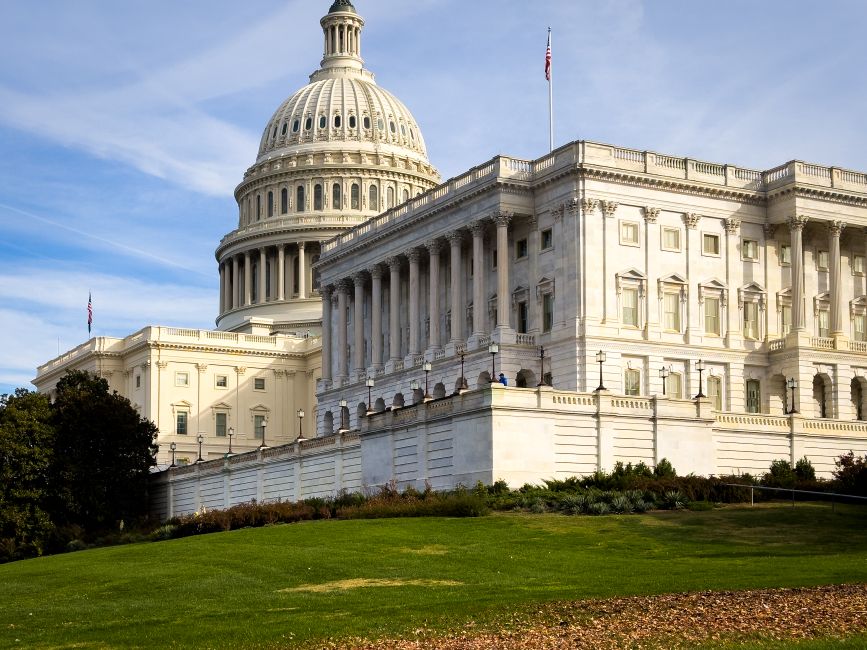
State Street CEO: Federal Reserve Should Hold Rates Steady Through 2026

A major institutional asset manager's public rate call adds to the chorus of market voices pressuring the Fed ahead of its next policy window, with trillions in managed assets behind the opinion.

Gab-E Intelligence Platform · August 10, 2026

State Street Investment Management President and CEO Yie-Hsin Hung stated publicly on August 10, 2026, that the Federal Reserve should not raise interest rates this year, according to a Bloomberg Surveillance interview published the same day. Hung, who leads a firm that managed approximately $4.7 trillion in assets under management as of its most recent public filings, characterized the U.S. economy as being 'in good shape' and said the current rate environment does not warrant tightening.

Hung further noted that gold and private markets are currently serving as portfolio anchors for many institutional investors, a positioning shift that reflects sustained uncertainty around U.S. monetary policy direction. State Street's publicly filed 13-F disclosures with the Securities and Exchange Commission provide the most granular available record of the firm's holdings positions, though those filings are reported on a quarterly lag.

The Federal Reserve's Federal Open Market Committee (FOMC) sets the federal funds rate through scheduled meetings, the minutes and statements of which are published at federalreserve.gov. The FOMC's most recent publicly available decision and statement, as of today's date, represents the operative policy baseline. Any deviation from current rates would require a formal FOMC vote recorded in those minutes.

Hung's comments carry institutional weight given State Street's role as one of the three largest custodial and index-fund operators in the United States, alongside BlackRock and Vanguard. However, the Federal Reserve operates independently of private sector guidance under the Federal Reserve Act, and Chair Jerome Powell's public testimony before Congress — available through the Senate Banking Committee and House Financial Services Committee records — remains the authoritative signal on the Fed's internal rate outlook.

What remains unknown is whether State Street has formally communicated its rate position to any Federal Reserve official or member of Congress. Records of any such communication, if conducted through registered lobbying activity, would appear in Lobbying Disclosure Act (LDA) filings maintained by the Senate Office of Public Records. State Street's most recent LDA filings, searchable at lda.senate.gov, would be the relevant public document to answer that question.

Today's Analysis
Loading...
Latest Intelligence
Congressional Intelligence
Loading...
Financial Intelligence
Loading...
Geopolitical Intelligence
Loading...
Follow the MoneyGab-E Political Intelligence Investigation
Loading...
Opinion & Analysis
Loading...
Archive
Loading...
About
Our Mission

We Follow the Data, Not the Narrative

The Congressional Times exists because public records are public — and the analysis built from them should not be exclusive to those who can afford $60,000-a-year intelligence subscriptions.

Every story published in The Congressional Times is sourced to a verifiable public record: a court filing, a Senate lobbying disclosure, an FEC contribution record, a USASpending contract, or a verified news report. We state our sources inline. We show our math. When we are wrong, we say so publicly.

We do not editorialize in news coverage. We do not use loaded language. Both political parties are held to identical standards.

The Follow the Money investigations are the heart of this publication. Each begins with Gab-E Political Intelligence running against 10+ million government records before a single word of editorial is written.

Powered by Gab-E, an elite global intelligence platform built to democratize political and financial intelligence.

Editorial Policy
Editorial Standards & Corrections Policy

How We Source, Verify, and Correct Our Work

Every factual claim in a Congressional Times story is checked against a primary source: a government filing, a court record, a direct quote, before publication. When a claim can't be verified or doesn't hold up as originally reported, we drop it or reframe it. We do not publish disputed claims as settled fact.

When we get it wrong: we correct the story directly, note the correction and date at the bottom of the piece, and update the record. We do not quietly edit and move on.

Bylines: stories with a named byline are written and fact-checked by that person. Stories without a byline are sourced from Gab-E Political Intelligence, our automated research platform, and are labeled as such.

Ownership: The Congressional Times is published by Gab-E Holdings LLC. Gab-E, our intelligence platform, powers our sourcing and research pipeline.

Corrections or concerns: support@gab-e.com