DSA-Backed Candidates Go 0-for-2 in Wisconsin's Primary Night
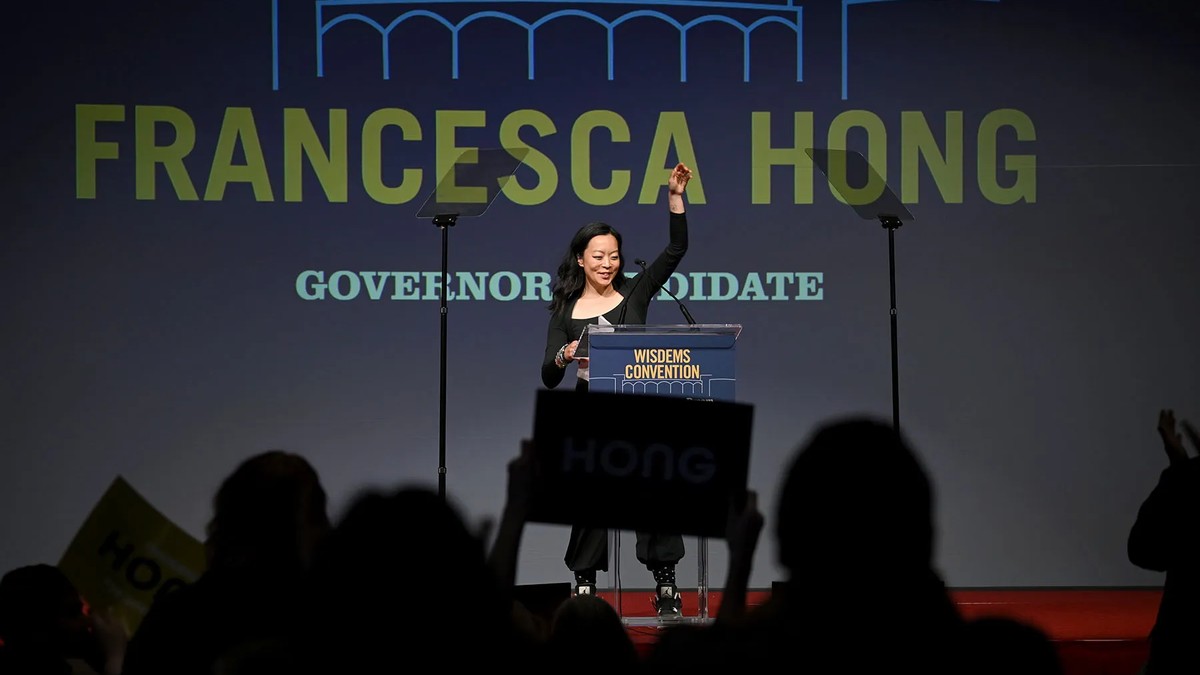
Both Democratic Socialists of America-endorsed candidates on Tuesday's ballot in Wisconsin lost narrowly, the latest flashpoint in a Democratic Party fight that has drawn a $15 million...
Democratic Socialists of America-endorsed candidate Francesca Hong lost Wisconsin's Democratic primary for governor to Milwaukee County Executive David Crowley on Tuesday, according to the Associated Press. Crowley led by roughly 3,000 votes, a margin of 0.4 percent, with the race called after Hong conceded early Wednesday morning. Hong had led every public poll in the race for weeks, including a State Navigate survey conducted August 3 to 6 that showed her ahead by 22 points.
Hong's polling lead largely built through early August, coinciding with an August 2 rally alongside Twitch streamer Hasan Piker and Representative Ilhan Omar that drew national coverage. But her campaign faced renewed scrutiny in the race's final days over past reversals, including 2020 social media posts calling to cancel Thanksgiving that she later walked back, and her opponent's campaign highlighted a January 2026 questionnaire in which Hong reaffirmed support for police and prison abolition. The gap between Hong's summer polling and her actual election night margin suggests the online attention generated by her campaign, including Piker's involvement, did not convert into votes at the rate her polling implied.
In the same state on the same night, DSA-backed candidate Emily Berge lost Wisconsin's 3rd Congressional District Democratic primary to Rebecca Cooke, 57.1 percent to 47.9 percent, according to the Associated Press. Berge had trailed by more than 40 points in Cooke's internal polling earlier in the campaign before narrowing the race substantially by election day, a pattern similar to Hong's, a late tightening that fell short of an actual win.
Piker's broader 2026 record is mixed rather than decisive. He also campaigned for Abdul El-Sayed's winning Michigan Senate bid and for two winning New York congressional candidates, Claire Valdez and Darializa Avila Chevalier, but Hong's loss, alongside a failed bid by Piker ally Saikat Chakrabarti in California, shows his ability to generate attention has not reliably translated into victories.
Both losses land amid an active, well-funded fight inside the Democratic Party itself. Third Way, a centrist Democratic think tank, announced a $15 million campaign in early August aimed at countering DSA's influence ahead of 2028, with the group's president calling the organization a "mortal danger" to the party in a published interview. DSA co-chair Megan Romer publicly dismissed the effort. Tuesday's results in Wisconsin give both sides of that internal fight new evidence for their case, DSA-aligned Democrats can point to competitive, narrowly-lost races in a presidential battleground state, while the party's centrist wing can point to two consecutive losses by candidates carrying the DSA label.
What remains unknown: whether Wisconsin's results reflect a genuine ceiling on DSA-backed campaigns in swing states specifically, or factors unique to Hong's and Berge's individual races. Wisconsin Elections Commission certified results, and any further Third Way or DSA statements following Tuesday's results, would be the primary sources capable of answering that question.