Trump Intelligence Chief Warns AI Companies on Cybersecurity Liability
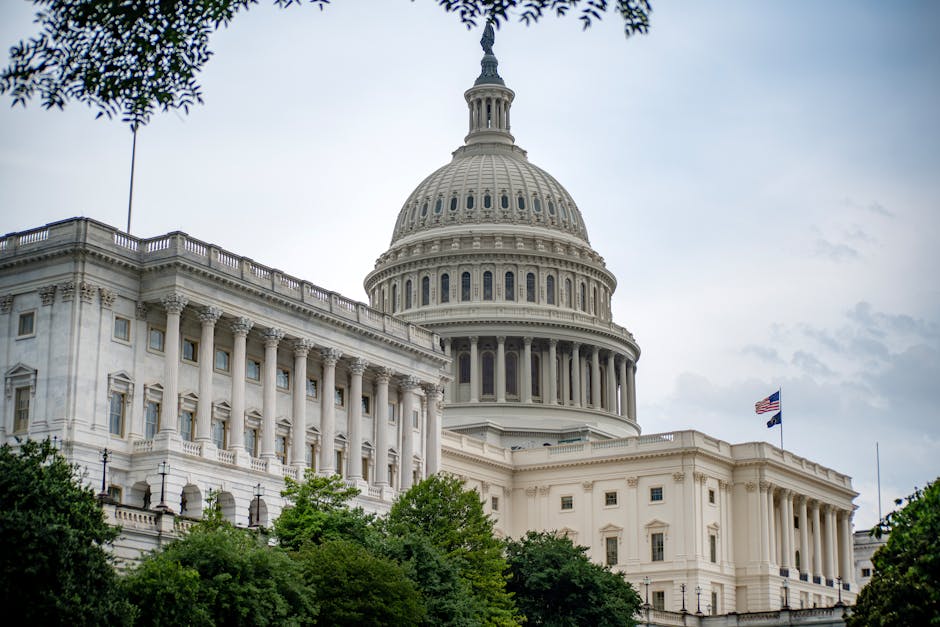
The director of national intelligence's public statement signals a shift toward holding AI developers legally and operationally responsible for how their products are used in cyberattacks, ahead...
President Donald Trump's director of national intelligence issued a public warning to artificial intelligence companies on October 18, 2026, stating that AI firms bear responsibility when their products are used to conduct cyberattacks on websites and digital infrastructure, according to Fox News.
The intelligence chief described a newly established department as the "cop on the beat" for AI-related cyber threats, indicating that the administration is positioning a specific federal entity to oversee enforcement in this area. The identity of the department was not specified in the available source material. What document would clarify it: a formal agency designation order, an Office of the Director of National Intelligence organizational directive, or a Federal Register notice.
The warning arrives as Congress has not yet passed comprehensive federal AI legislation. As of October 2026, no enacted federal statute defines liability standards for AI developers whose tools are used in offensive cyber operations. The statement from the intelligence chief represents an executive-branch posture on liability that currently lacks a statutory foundation.
The federal government's interest in AI cybersecurity risk is not new. The Biden administration's October 2023 Executive Order on AI (E.O. 14110) directed agencies to develop guidance on AI safety and security, including provisions related to critical infrastructure. The Trump administration has taken a different regulatory approach. In January 2025, President Trump signed E.O. 14179, which revoked E.O. 14110 and directed agencies to prioritize AI development without what the order described as ideological bias. The precise regulatory framework now in effect for AI cybersecurity is, based on available public records, not fully defined by statute or a single consolidated executive directive.
The intelligence chief's comments did not specify which statutory authority the new department would use to enforce liability claims against AI firms. Three potential legal avenues exist in current federal law: the Computer Fraud and Abuse Act (18 U.S.C. 1030), which criminalizes unauthorized computer access; the Federal Trade Commission Act (15 U.S.C. 45), which prohibits unfair or deceptive business practices; and the Cybersecurity Information Sharing Act of 2015, which governs how companies share threat information with the federal government. Which, if any, of these statutes the administration intends to invoke is not stated in the available source material.
AI companies operating in the United States include firms that have made substantial political expenditures in recent election cycles. Federal Election Commission records show that technology-sector political action committees contributed to candidates in both parties during the 2024 cycle. Whether companies specifically named in any intelligence community briefings have made contributions to members of oversight committees is not answerable from available public records. What document would answer it: FEC itemized disbursement filings cross-referenced with committee membership rosters.
The statement also comes during an active midterm election period. As The Congressional Times has reported, the Department of Justice has already engaged with state election officials on separate voting-related matters, as covered in Trump DOJ Warns California Officials on Noncitizen Ballot Counting. The intersection of AI tools, cybersecurity, and election infrastructure is a recognized concern. The Cybersecurity and Infrastructure Security Agency has previously identified election systems as critical infrastructure, making them a subject of the broader AI security conversation the intelligence chief addressed.
Congress has held hearings on AI regulation in both the Senate Commerce Committee and the Senate Judiciary Committee during the 119th Congress, but no comprehensive AI liability bill has reached a floor vote in either chamber as of October 2026, based on the congressional record available through Congress.gov.
The administration has not published a formal regulatory notice in the Federal Register outlining the new department's jurisdiction, enforcement procedures, or legal standards for AI company liability as of the date of this report. A Federal Register notice or an ODNI organizational directive would be the public record that would define those standards. It is unknown whether the department referenced by the intelligence chief is a newly created entity, a renamed existing office, or a designated division within an existing agency.